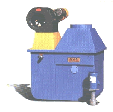
Evaporative systems are also an important tool in the drive towards waste minimisation. Evaporation with cascade rinsing offers a simple and effective way of closing the loop. The benefit is a substantial reduction in process and effluent treatment chemicals. Nickel and chromium plating are particularly suited to this approach, and the technology is common in Germany, Scandinavia and the US. Several in-house and sub-contract plating shops in the UK are using these sustems.




In addition to water conservation and evaporation technology products, Marquis provides process design and project management services for new and refurbished plating plant. This enables plating companies to obtain the best plant for its capital outlay, and ensures that the installation meets the required specification and performance with minimum day-to-day involvement of the purchaser's management.
A recent
example is the supply of process design specifications and purchasing services
for installation of a process heating system with hot pressurised water as
the thermal fluid for a £multi-million turnover plating contractor in
the West Midlands.
Another example is the specification and project management for an automated magnesium plating facility for Ingram & Glass Ltd.
An initial plating shop study, which usually takes two to three days, forms the basis for a formal report. The report predicts the expected cost reduction, forecasts equipment investment and payback period, and provides an action plan.
The Marquis methodology for a conservation study is to establish a definitive water balance across the metal finishing shop. Water usage for each process line is determined by using non-evasive ultrasonic flow measurement equipment and other techniques. New water consumption rates are then established and based on rinsing ratios established by real time experience obtained during the last six years. During the site study, the opportunity is taken to analyse trade effluent concentration, sludge/filter cake quality, process drag-out rates and other data relevant to improving the process operation of the shop.
A formal report and presentation is then made to the client. At this time an overall water reduction objective is established set against a benchmark based on the previous six month period for invoiced water and trade effluent costs.
The report defines the capital investment required and the necessary steps to be taken to achieve profitablity improvement.
Following acceptance of the report, the project goes ahead under Marquis supervision. Water and trade effluent flows are monitored and performance of the water reduction devices confirmed. The extent of the water saving usually becomes apparent within a few days.









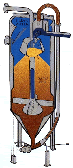
Marquis is now promoting the use of ANDRITZ continuous backwash sand filtration for the treatment of plating shop trade effluent. Originally developed for the potable water industry, these systems obviate the need for clean and dirty wash water storage, circulation pumps, and automated backwash programmes. The system needs only a small supply of compressed air for its operation. Filtration takes place by gravity.
Glacier Vanderrell Europe in Scotland and Metal Colours Ltd in the southeast have recently installed units achieving excellent results.